
iSyncBrain for ADHD and Depression EEG Assessment
Objective EEG Insights for Mental Health Clinics—in Minutes
iMediSync gives mental health clinics a faster way to bring objective brain data into ADHD and depression assessment.
iSyncWave portable wireless EEG headset captures 19-channel EEG without conductive gel. EEG data can then be analyzed through iSyncBrain, including age- and sex-matched quantitative EEG analysis and an easy-to-understand 5 Key Indicators of Brain Functionality Report.
Instead of relying only on questionnaires, interviews, and observed symptoms, clinicians can add another layer of information: the patient's measured electrical brain activity.
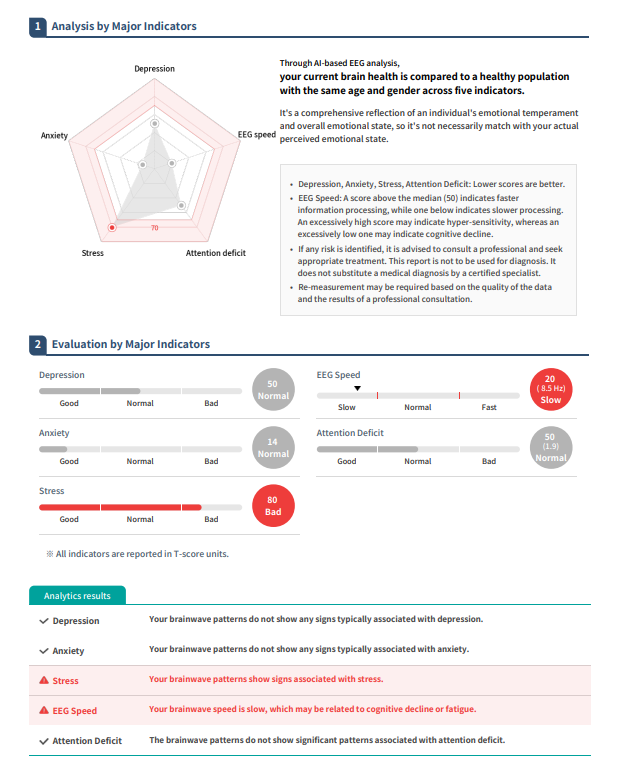
What Does the 5 Key Indicators EEG Report Show?
The 5 Key Indicators Report uses AI-based EEG analysis to summarize brain activity across five areas: Depression, Anxiety, Stress, EEG Speed, Attention Deficit.
See the Reports Clinicians Actually Read
Clear, visually structured objective data designed to support patient education and clinical decision-making.
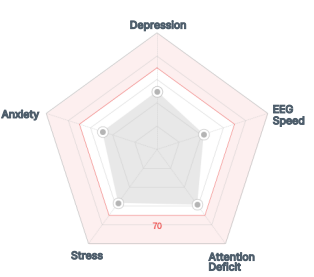
5 Key Indicators of Brain Functionality
Depression, anxiety, stress, EEG speed and attention deficit at a glance.
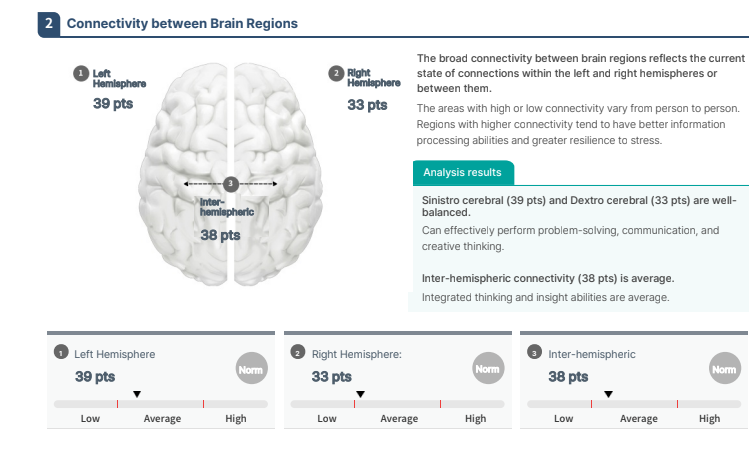
Brain Connectivity Report
Hemispheric, interhemispheric, anterior and posterior functional connectivity.
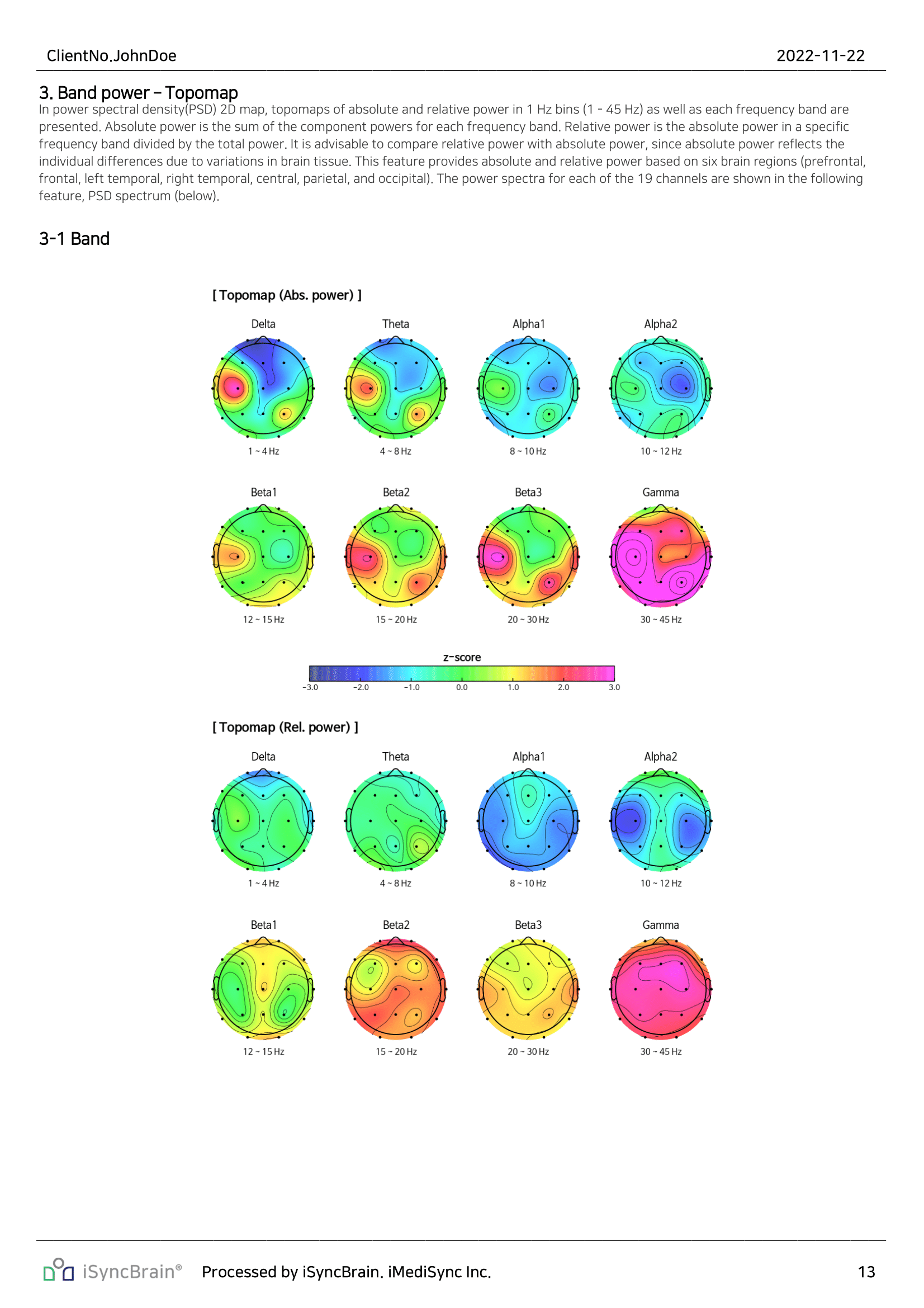
Normative qEEG Report
EEG variables compared with age- and sex-matched normative reference data.
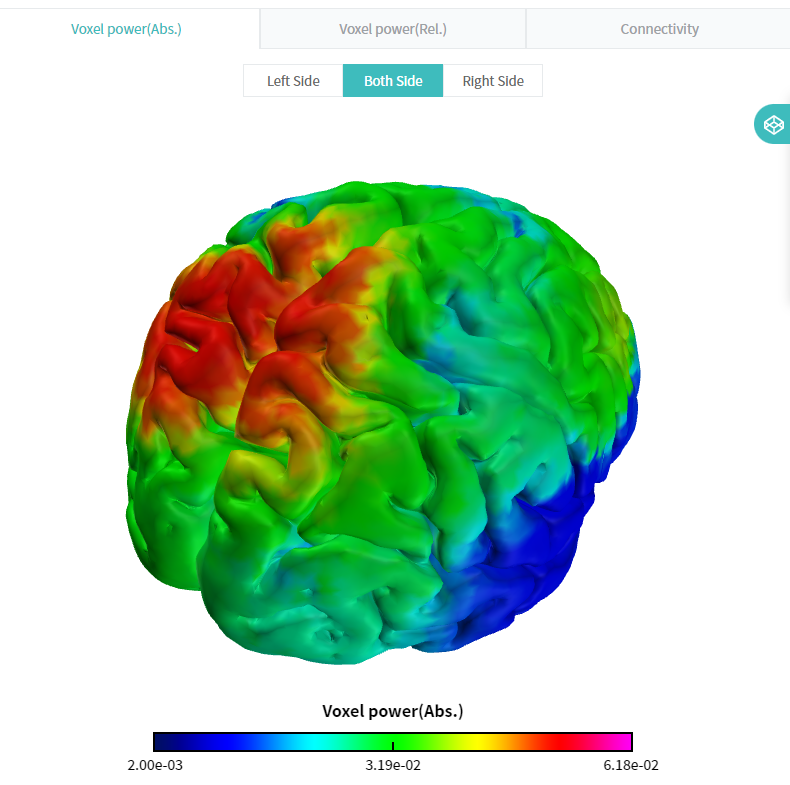
Normative qEEG + 3D sLORETA
Source-level analysis rendered on a 3D brain model.
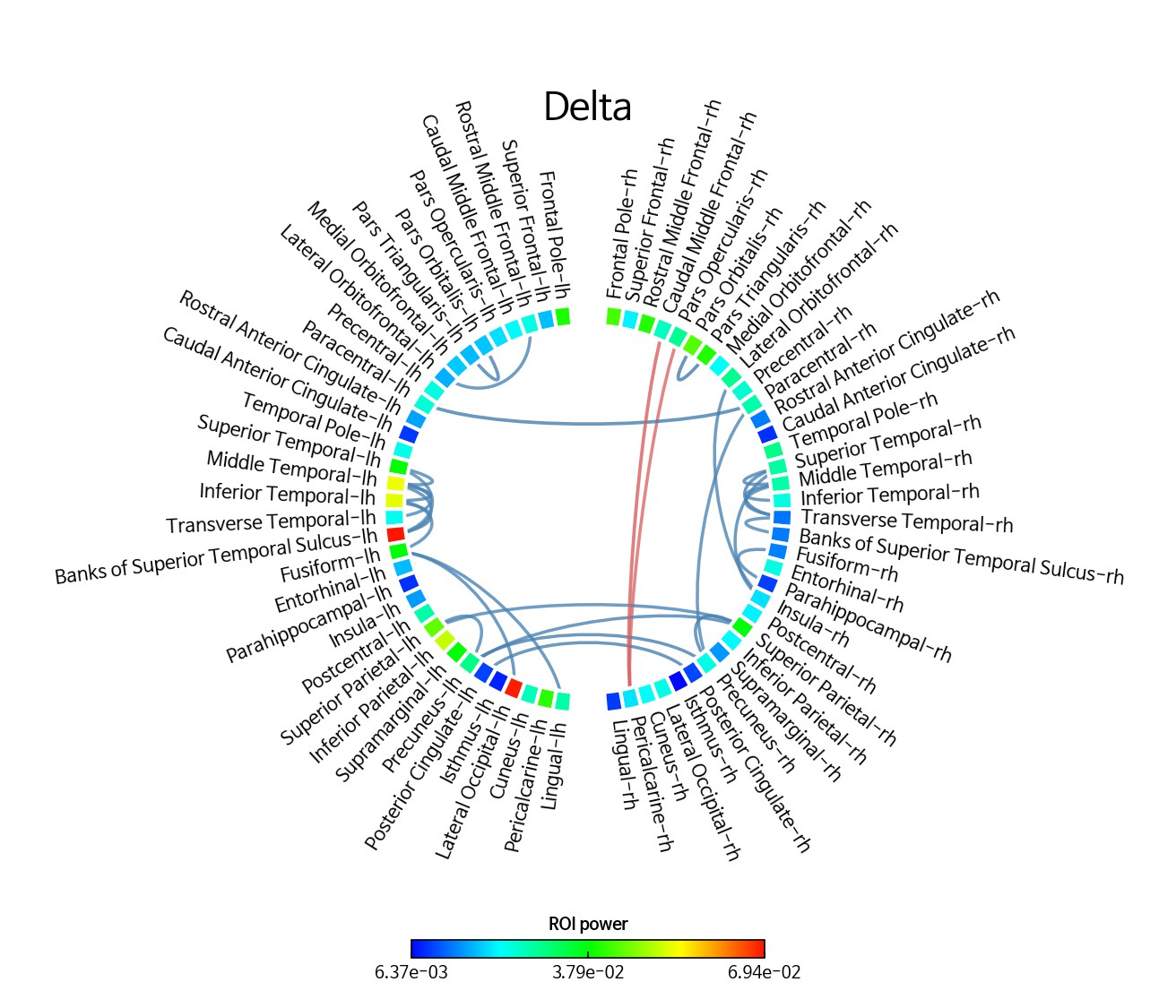
ROI Connectivity Analysis
Region-of-interest relationships across the cortex.
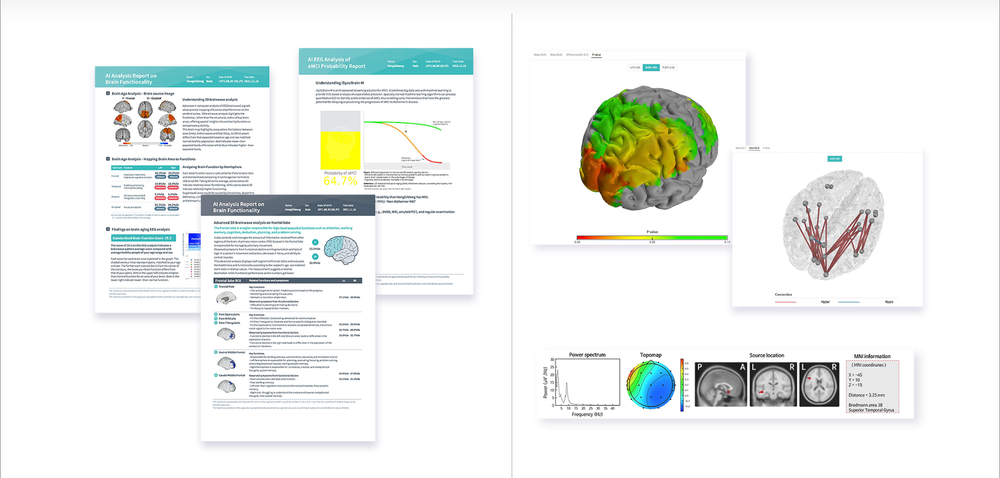
Clinical Report Review
Visual reports designed for clinical review and patient education.
Can EEG Help With ADHD Assessment?
EEG can provide objective information about brain activity associated with attention and cognitive processing, but ADHD diagnosis should still be based on a comprehensive clinical evaluation.
Research has identified EEG differences in some people with ADHD, including differences involving slow and fast brainwave activity and functional connectivity. However, ADHD is heterogeneous, and no single EEG measurement identifies every patient with ADHD.
That is why iSyncBrain is designed to provide clinicians with additional neurophysiological context rather than replace established ADHD assessment methods.
The 5 Key Indicators Report includes an Attention Deficit score alongside EEG Speed, stress, anxiety, and depression indicators, giving clinicians a broader view of the patient's resting brain activity.

Can EEG Help With Depression Assessment?
Quantitative EEG can reveal patterns of brain activity that may provide additional information during depression assessment and treatment planning.
Depression does not produce one universal EEG pattern. Research has explored differences in spectral power, alpha activity, asymmetry, connectivity, and other electrophysiological measures in people with depression.
iSyncBrain allows clinicians to examine EEG data objectively while the 5 Key Indicators Report converts portions of that analysis into an accessible Depression indicator that can be reviewed together with the patient's clinical presentation.
For mental health clinics moving toward measurement-based and personalized care, EEG provides a different type of information from a symptom questionnaire: it measures electrical brain activity directly.
From EEG Recording to Mental Health Insight
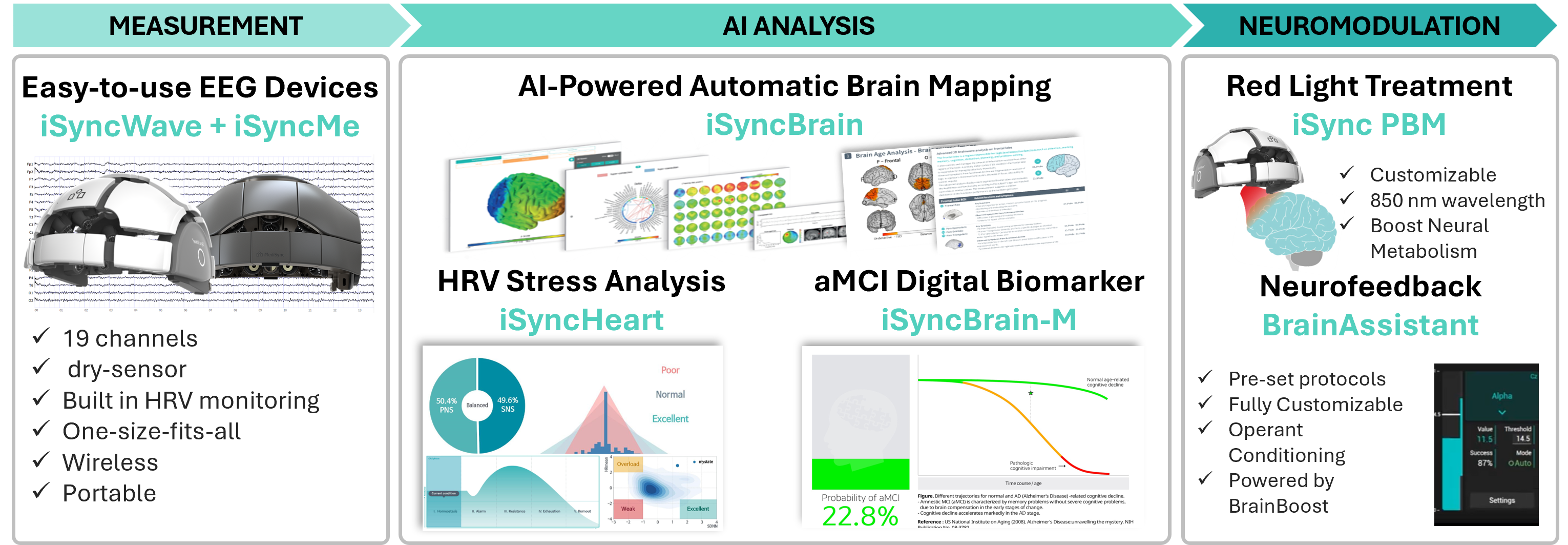
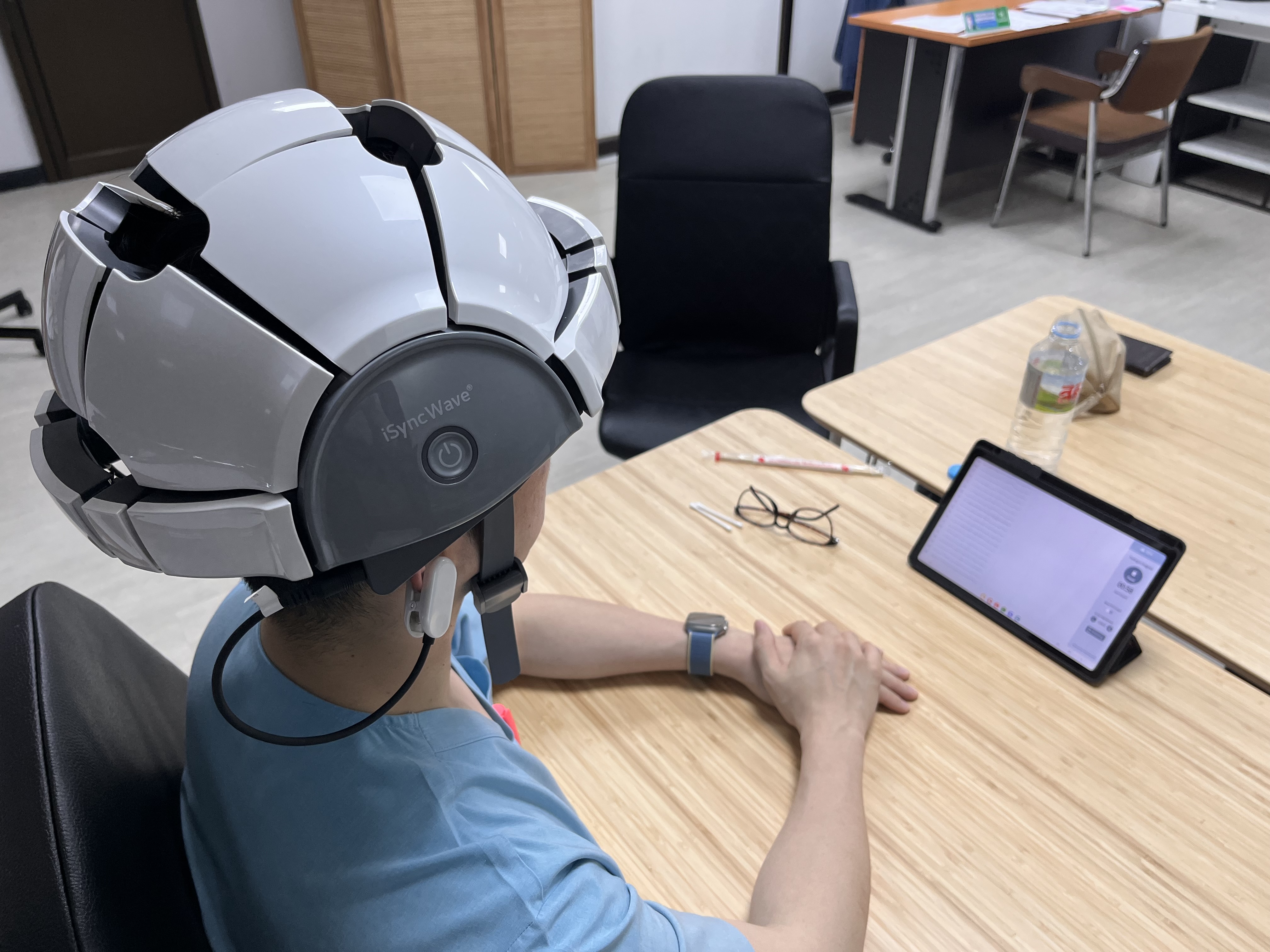
Capture the EEG
The iSyncWave is a portable, wireless, 19-channel EEG system using dry electrodes positioned according to the international 10–20 system. No conductive gel is required.
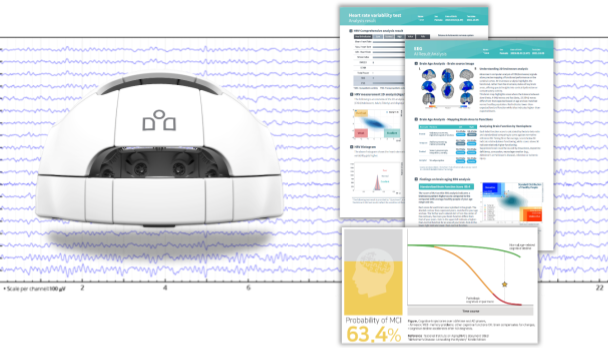
Analyze the Brain Activity
EEG data can be processed through iSyncBrain for quantitative analysis, including spectral power, ratios, alpha peak frequency, source-level analysis, and functional connectivity. The FDA-cleared iSyncBrain-C software compares EEG variables with age- and sex-matched normative reference data.
Review the 5 Key Indicators
The additional AI-based 5 Key Indicators Report converts the recording into a concise visual overview of: Depression · Anxiety · Stress · EEG Speed · Attention Deficit
Review Brain Connectivity
The accompanying connectivity report examines relationships across the brain, including: Overall functional connectivity; Left and right hemisphere connectivity; Interhemispheric connectivity; Left and right anterior connectivity; Left and right posterior connectivity. This gives the clinician both a simplified summary and access to deeper quantitative EEG information when needed.
Why Mental Health Clinics Are Looking at Portable Wireless EEG Solutions
Traditional EEG workflows were largely developed around hospital neurology. Mental health clinics have different requirements. They need technology that fits into an outpatient workflow, is comfortable for repeated measurements, produces useful information quickly, and does not require every clinician to become an EEG researcher. iSyncWave and iSyncBrain were designed around that type of workflow.

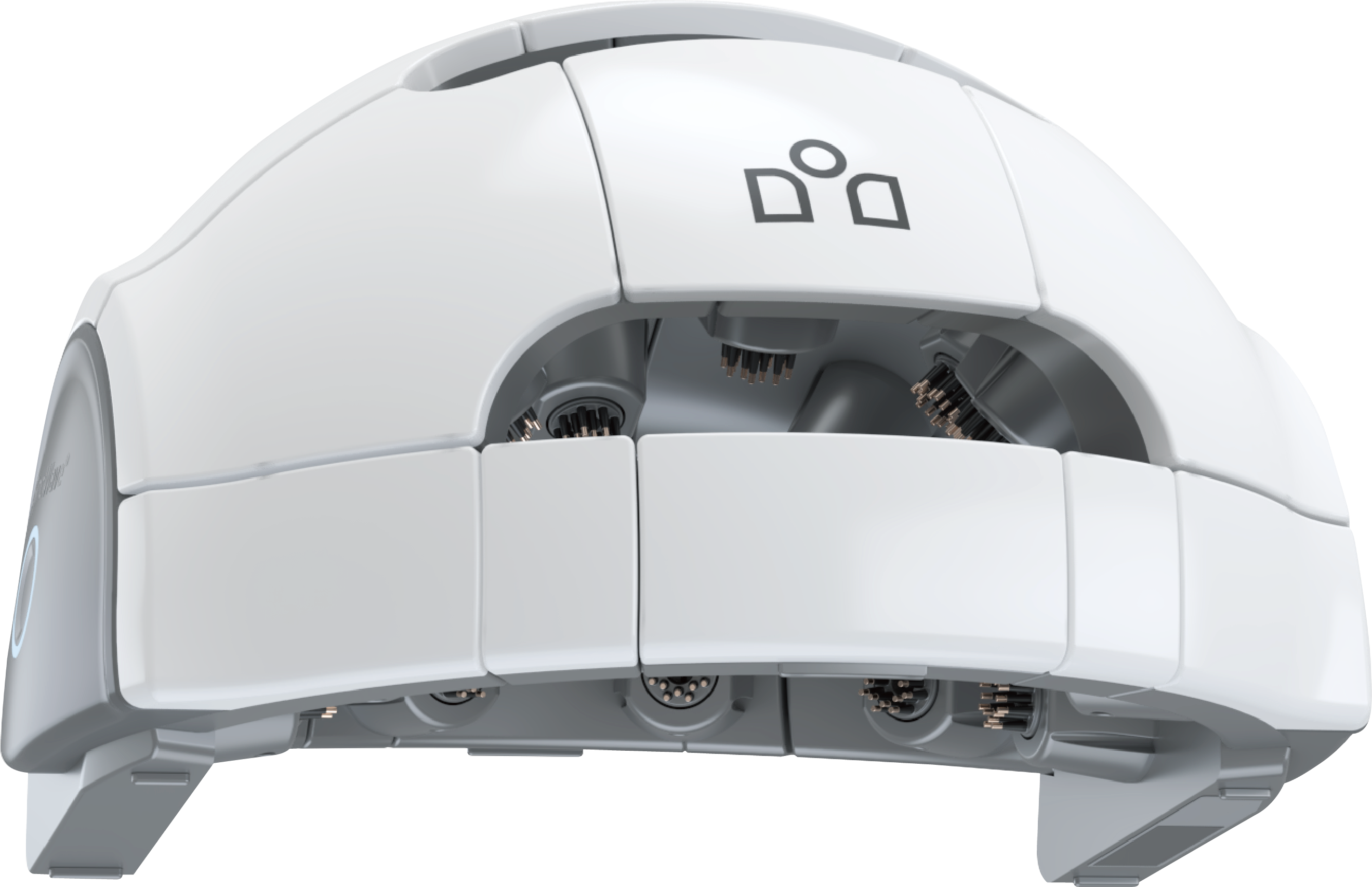
Dry EEG Headset
Dry electrodes remove the conductive-gel preparation associated with many conventional electroencephalography devices.
Wireless Acquisition
iSyncWave transfers EEG data wirelessly, allowing clinics to operate without a traditional EEG cart and large collection of cables.
19-Channel EEG
The system records a standard 19-channel montage rather than reducing brain assessment to only one or two frontal electrodes.
Automated Analysis
iSyncBrain uses automated EEG processing and quantitative analysis to reduce the amount of manual processing required to turn a recording into interpretable data.
Visual Reporting
Complex qEEG data can be presented through brain maps, normative comparisons, and simplified reports designed for clinical review and patient education.
Clinical EEG Comparison: What Should a Mental Health Clinic Look For?
When comparing portable wireless EEG solutions, consider more than whether a device can record brainwaves.
| Feature | Why It Matters |
|---|---|
| 19-channel EEG | Provides broader coverage of brain activity |
| Dry electrodes | Reduces preparation and cleanup |
| Wireless recording | Makes outpatient acquisition easier |
| Normative qEEG analysis | Adds context by comparing EEG measurements with reference data |
| Age- and sex-matched comparison | Makes normative interpretation more individualized |
| Automated processing | Reduces manual EEG analysis |
| Mental-health-oriented reports | Makes results easier to incorporate into psychiatric workflows |
| Connectivity analysis | Adds information about relationships between brain regions |
| Repeat testing | Creates an objective way to compare brain activity over time |
More Than an ADHD or Depression Score
One advantage of the iSyncBrain approach is that clinicians are not limited to a single biomarker. The 5 Key Indicators Report looks at depression, anxiety, stress, EEG speed, and attention together. That matters because mental health symptoms frequently overlap.
A patient presenting with poor concentration, for example, may also report sleep problems, anxiety, stress, depressed mood, medication effects, or other factors that influence cognitive performance. Rather than reducing that patient to one number, EEG gives clinicians another objective dataset to consider alongside the broader clinical picture.
See Brain Function. Then Track Change.
EEG can also be repeated. That makes quantitative EEG particularly interesting for clinics using interventions such as: Medication management; TMS; Neurofeedback; Psychotherapy; Behavioral interventions; Other personalized mental health programs.
A baseline recording creates an objective reference point. Follow-up recordings can then be compared with the patient's earlier EEG alongside symptoms and clinical outcomes. For clinics already practicing measurement-based care, EEG adds a physiological measurement to the process.
Is iSyncBrain FDA Cleared?
Part of the iMediSync platform is FDA cleared, while the mental-health indicator report has a different regulatory status.
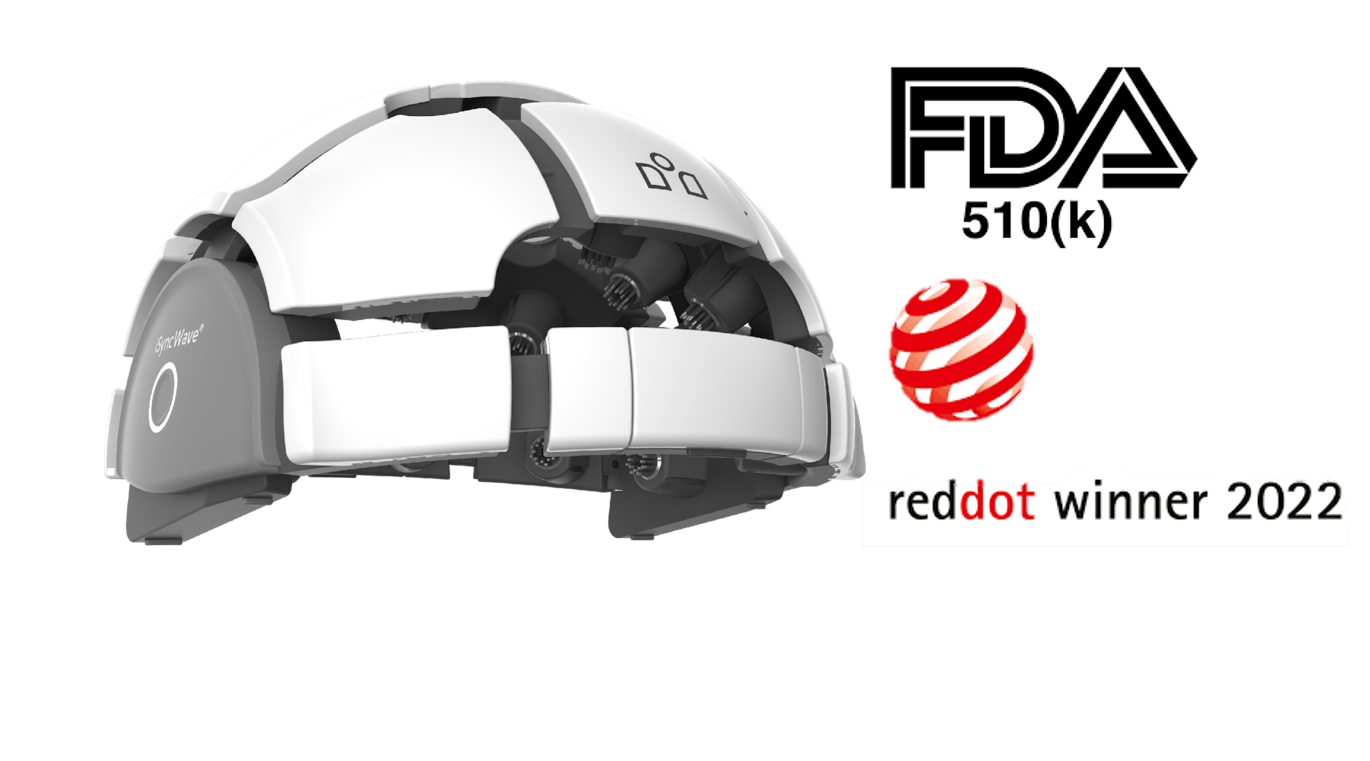
The iSyncWave is an FDA-cleared Class II full-montage electroencephalograph for acquiring, transmitting, displaying, and storing EEG.
iSyncBrain-C is FDA-cleared quantitative EEG software intended for statistical evaluation of human EEG by qualified medical or clinical professionals in patients ages 4.5 to 81.
The 5 Key Indicators of Brain Functionality Report, including its Depression, Anxiety, Stress, EEG Speed, and Attention Deficit indicators, is an additional AI-based analysis report and is not FDA cleared as a diagnostic test for ADHD, depression, anxiety, or other psychiatric disorders.
Clinicians should use these indicators as supportive information within an appropriate clinical assessment.
Frequently Asked Questions
Bring Objective EEG Data Into Mental Health Assessment
Mental health assessment will always require clinical judgment. But it no longer has to rely exclusively on subjective information.
With iSyncWave and iSyncBrain, mental health clinics can combine portable dry EEG acquisition, quantitative EEG analysis, age- and sex-matched normative comparison, functional connectivity, and easy-to-understand mental health indicators in one streamlined workflow.
See how iSyncBrain could fit into your clinic.