
INDIVIDUAL CASE REPORT · N = 1
A closer look at calm and focus
Anxiety
Reported changes in calmness and focus, paired with EEG observations across a 20-session course.
Case findings
Reported experience
The case author describes reduced restlessness and improved calm and focus after 20 sessions. No numerical anxiety, sleep or quality-of-life score was reported.
What the EEG added
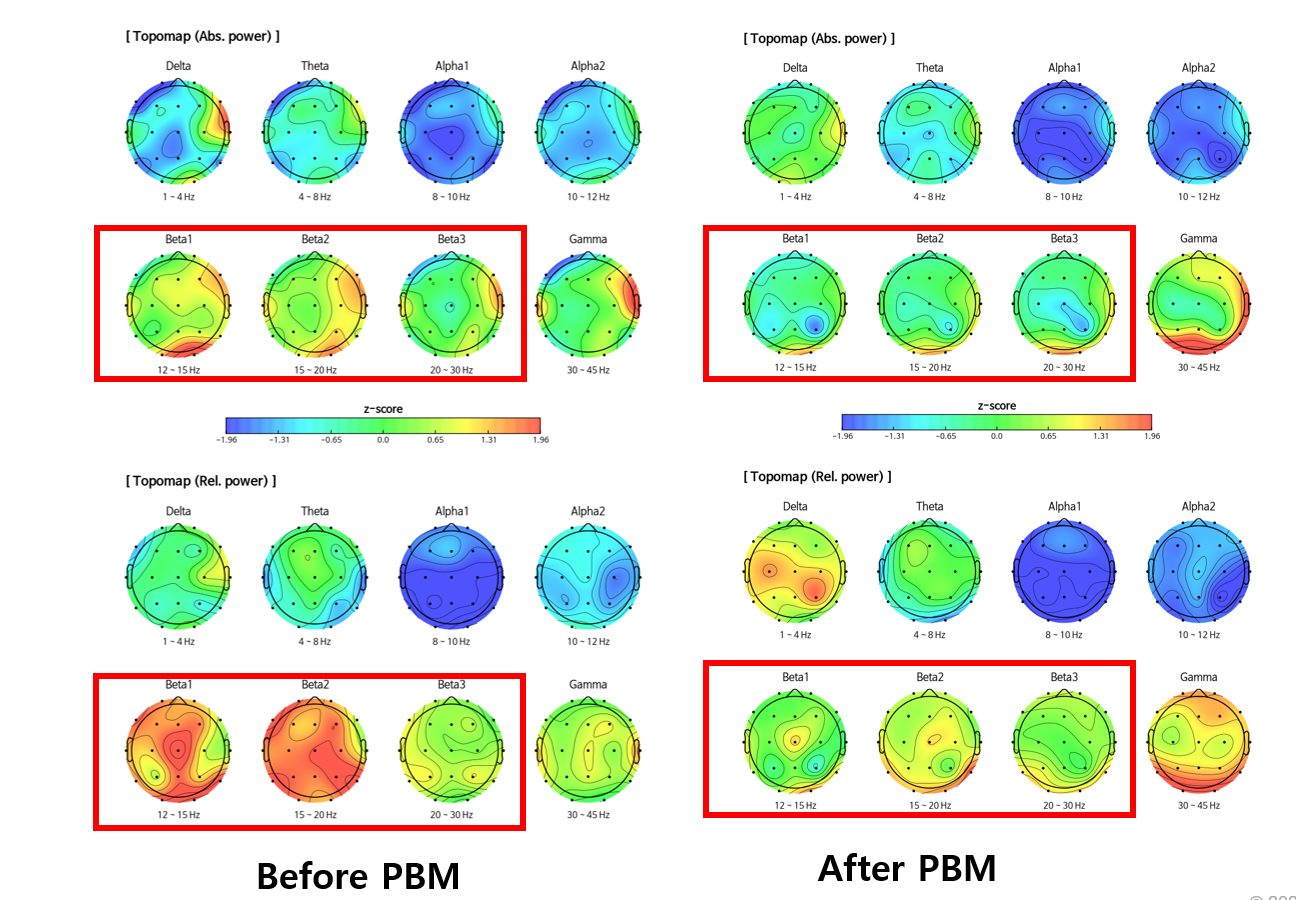
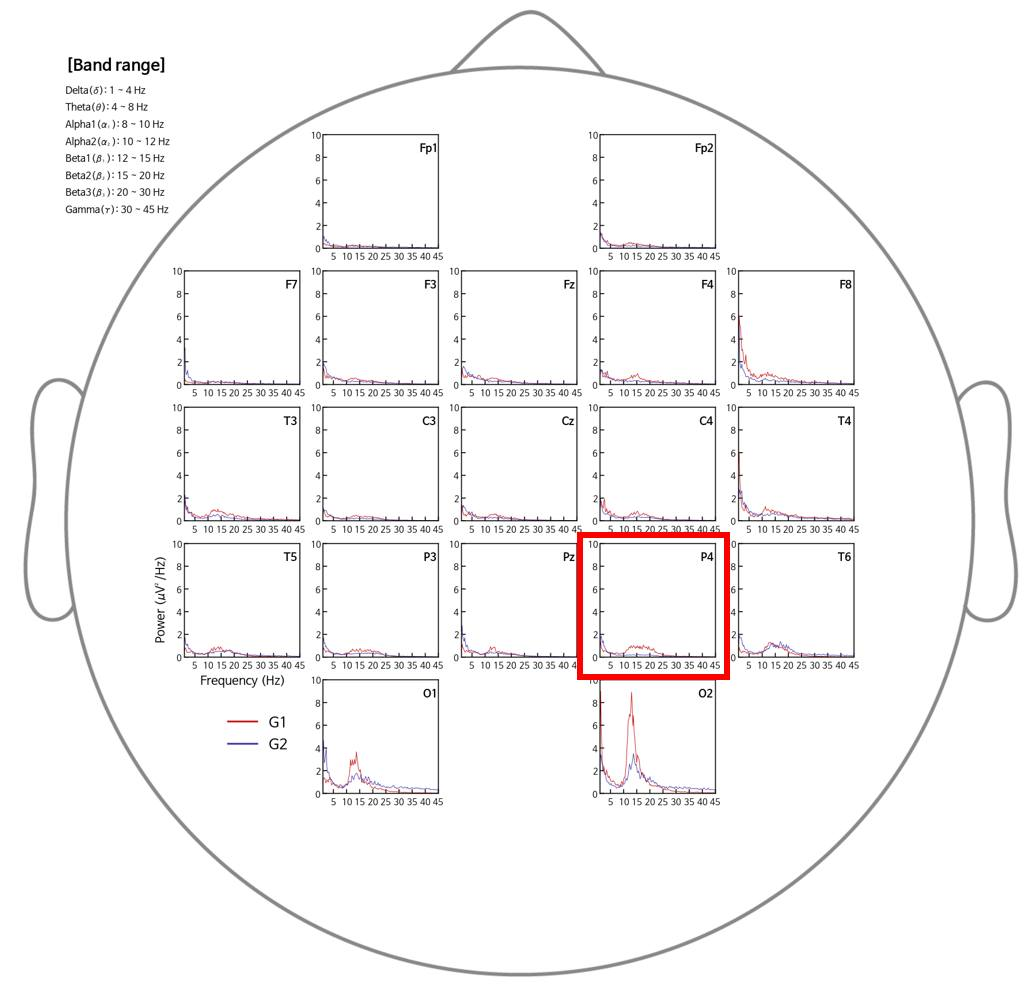
Baseline captions describe fast posterior alpha activity around 13 Hz and beta activity near P4. Follow-up comparisons describe reduced beta activity and fast-alpha activity.
Individual case observations; they do not prove a PBM effect. iMediSync PBM functionality is not FDA-cleared.
ORIGINAL FIGURES
The source evidence
Figures reproduced from the original report without altering the data. Open any image to view it at full size. Original annotations are retained.
The observed course
The reported approach combined a relaxation protocol with 1 Hz inhibition, delivered three times weekly. The source compares the relaxation approach with alpha-theta neurofeedback; it does not establish that the two interventions are equivalent.
How to read this case
Clinical benefit is qualitative. Medication history, longer-term follow-up and standardized symptom scores are not supplied in the reviewed text. The case cannot establish efficacy for an anxiety disorder.
Source and documentation
Adapted from the IQPA case community. Reviewed November 6, 2026. Observations and figures come from the original report; no patient outcomes have been generated or estimated.
Read the original IQPA report (login may be required)